
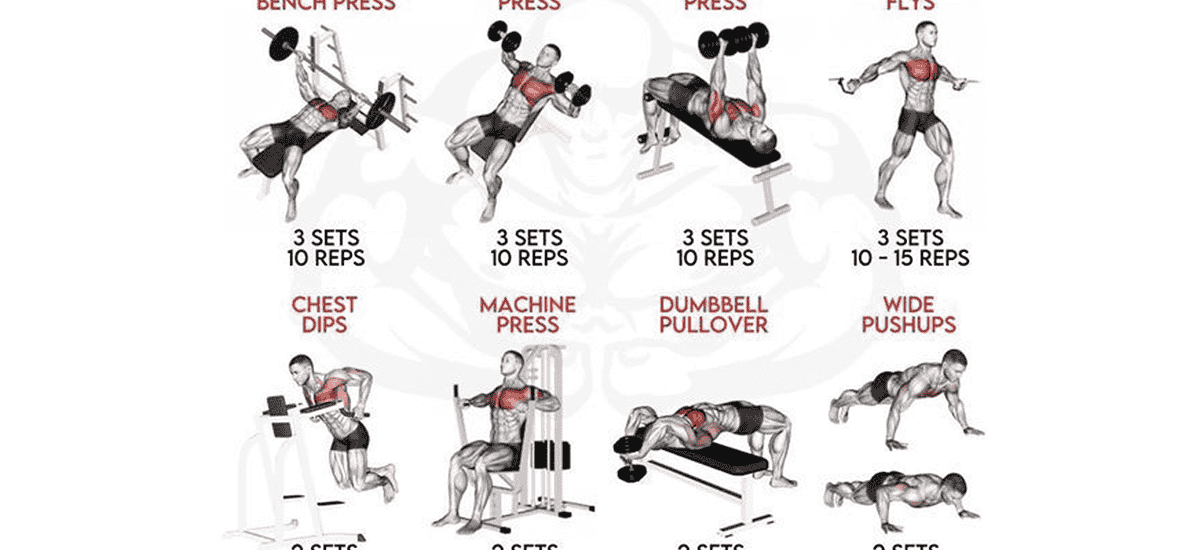
Building a strong and well-shaped chest is a common fitness goal for many people. A smart chest workout not only improves upper-body appearance but also enhances pushing strength, posture, and overall performance. When done correctly, chest-focused training supports daily movements and helps prevent muscular imbalances.
This article explains how chest muscles work, the advantages of chest training, the most effective exercises, sample routines for gym and home, common mistakes, and proven tips for better results.
Understanding the Chest Muscles
Before starting chest training, it is important to understand which muscles are involved. The chest area mainly consists of two muscles that work together during pushing and lifting movements.
Main Chest Muscles
- Pectoralis Major
This is the large, fan-shaped muscle that gives the chest its size and strength. It plays a key role in pushing movements. - Pectoralis Minor
Located beneath the pectoralis major, this muscle helps stabilize the shoulder blades.
For balanced development, your training routine should target the upper, middle, and lower portions of the chest.
Why Chest workout Is Important
Regular chest-focused workouts provide multiple physical and functional benefits.
Key Benefits of chest workout
- Builds upper-body strength
- Improves posture and shoulder support
- Enhances muscle definition
- Increases pushing power
- Supports better performance in sports and daily tasks
Additionally, a strong chest works in coordination with the shoulders and arms, making other exercises more effective.
Best chest workout for Development
Including a mix of compound and isolation movements is the most effective way to train the chest muscles.
1. Barbell Bench Press
This is one of the most effective exercises for building chest mass and strength.
Benefits include:
- Targets the entire chest
- Allows progressive overload
- Builds overall upper-body power
2. Dumbbell Bench Press
Using dumbbells improves range of motion and muscle balance.
Why it works:
- Activates stabilizing muscles
- Improves symmetry
- Allows deeper muscle stretch
3. Incline Press
Incline pressing movements focus more on the upper chest area.
Advantages:
- Improves upper chest thickness
- Enhances chest shape
- Supports shoulder strength
4. Chest Fly Movements
Fly exercises can be performed with dumbbells or cables.
Key benefits:
- Improves chest width
- Enhances muscle contraction
- Helps with muscle definition
5. Push-Ups
Push-ups are a highly effective bodyweight exercise for chest strength.
Why they are useful:
- No equipment required
- Suitable for all fitness levels
- Strengthen chest, shoulders, and arms
6. Dips (Chest Focus)
Leaning forward during dips places more emphasis on the chest muscles.
Benefits:
- Targets the lower chest
- Builds functional strength
- Improves upper-body control
Sample Chest workout Routine (Gym)
Below is a balanced routine designed for muscle growth and strength.
Gym Chest workout Routine
- Barbell Bench Press – 4 sets × 8–10 reps
- Incline Dumbbell Press – 3 sets × 10–12 reps
- Flat Dumbbell Fly – 3 sets × 12–15 reps
- Cable Fly – 3 sets × 12 reps
- Push-Ups – 2 sets to failure
Rest period: 60–90 seconds between sets
This routine targets all sections of the chest while allowing proper recovery.
Chest workout at Home Without Equipment
You do not need a gym to build chest strength. Bodyweight exercises can still deliver great results.
Home Chest workout Routine
- Standard Push-Ups – 4 sets × 15 reps
- Incline Push-Ups – 3 sets × 12 reps
- Decline Push-Ups – 3 sets × 10 reps
- Wide Push-Ups – 3 sets × 12 reps
- Static Chest Hold – 2 sets × 30 seconds
This routine improves muscle endurance and strength using your own body weight.
Common Mistakes to Avoid during chest workout
Many people fail to see results due to simple training errors.
Frequent Mistakes
- Using excessive weight with poor form
- Skipping warm-up sets
- Training chest too often
- Ignoring upper or lower chest areas
- Relying on momentum instead of control
Focusing on proper technique is more important than lifting heavy.
Tips for Better Chest workout Results
Follow these tips to improve muscle growth and strength safely.
Expert Tips
- Use a full range of motion
- Maintain mind-muscle connection
- Train chest one or two times per week
- Combine heavy lifts with isolation movements
- Support training with proper nutrition and rest
Progressive overload and consistency are the keys to success.
How Often Should You Train the Chest?
Beginners should start with one session per week, while intermediate and advanced lifters can train the chest twice per week with enough recovery time between workouts.
Adequate rest allows muscles to repair and grow stronger.
Final Conclusion
A well-planned chest workout plays a major role in building upper-body strength, muscle size, and overall balance. By understanding chest anatomy, choosing effective exercises, and avoiding common mistakes, you can achieve steady and long-lasting results. Whether training at home or in the gym, discipline, proper form, and recovery will help you reach your fitness goals