
If you want to build a powerful upper body without stepping into a gym, a chest workout at home can deliver impressive results. You don’t need heavy machines or expensive memberships to grow your chest muscles. With the right exercises, proper technique, and consistency, you can develop strength, muscle definition, and endurance right in your living room.
In this complete guide, you’ll learn the most effective exercises, benefits, workout structure, and expert tips to maximize your chest workout at home routine.
Why Choose a Chest Workout at Home?
Training at home offers flexibility and convenience. Here are some strong reasons to start:
- No equipment required
- Saves time and money
- Flexible workout schedule
- Beginner-friendly and scalable
- Improves upper body strength
A structured chest workout at home can target all major chest muscles, including the pectoralis major and minor, while also engaging your shoulders and triceps.
Understanding Your Chest Muscles
Before starting any chest workout, it’s important to know what you are training.
- Pectoralis Major – The large muscle responsible for chest size and strength.
- Pectoralis Minor – Located beneath the major muscle, helps with shoulder movement.
- Supporting Muscles – Triceps and anterior deltoids assist in pushing movements.
When you perform bodyweight exercises correctly, you activate all these muscles effectively.
Best Chest Workout at Home Exercises
Here are the most effective exercises you can include in your routine.
1. Standard Push-Ups
Push-ups are the foundation of any chest workout.
How to do it:
- Place hands slightly wider than shoulder-width.
- Keep your body straight.
- Lower your chest toward the floor.
- Push back up slowly.
Benefits:
- Builds overall chest strength
- Engages core muscles
- Improves upper body endurance
2. Wide Push-Ups
This variation targets the outer chest.
Steps:
- Place hands wider than normal.
- Lower your body slowly.
- Push up while keeping elbows slightly flared.
This version increases chest activation compared to regular push-ups.
3. Incline Push-Ups
Perfect for beginners.
How to perform:
- Place hands on a bench, table, or sturdy surface.
- Keep feet on the ground.
- Perform push-ups with controlled movement.
Incline push-ups reduce bodyweight resistance, making your chest workout at home more accessible.
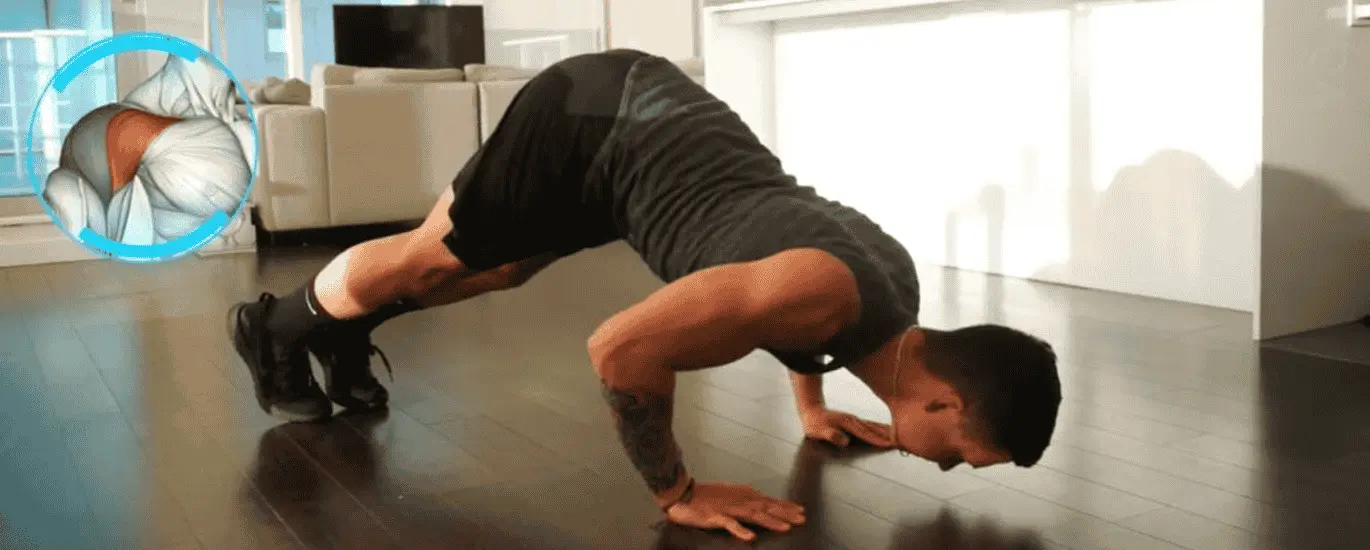
4. Decline Push-Ups
To target the upper chest:
- Place feet on an elevated surface.
- Keep hands on the floor.
- Lower your chest and push up powerfully.
This increases difficulty and stimulates upper chest growth.
5. Diamond Push-Ups
This focuses more on the inner chest and triceps.
- Form a diamond shape with your hands.
- Lower your body carefully.
- Push up while maintaining form.
Add this to intensify your chest workout routine.
6. Explosive Push-Ups
For advanced training:
- Perform a normal push-up.
- Push upward explosively.
- Lift hands briefly off the ground.
This builds power and muscle activation.
Sample Chest Workout at Home Plan
Here’s a simple yet effective structure:
Beginner Level:
- 3 sets of 10 Standard Push-Ups
- 3 sets of 8 Incline Push-Ups
- 2 sets of 8 Wide Push-Ups
Intermediate Level:
- 4 sets of 12 Standard Push-Ups
- 3 sets of 10 Decline Push-Ups
- 3 sets of 12 Wide Push-Ups
- 2 sets of Diamond Push-Ups
Advanced Level:
- 4 sets of 15 Push-Ups
- 4 sets of 12 Decline Push-Ups
- 3 sets of Explosive Push-Ups
- 3 sets of Diamond Push-Ups
Rest 30–60 seconds between sets for best results.
Tips to Maximize Your Chest Workout at Home
To get the most out of your training:
- Maintain proper form at all times.
- Control the tempo (slow down during the lowering phase).
- Increase reps gradually every week.
- Add variations to avoid plateaus.
- Train 2–3 times per week for recovery and growth.
Consistency is the key to building muscle through a chest Muscle.
Common Mistakes to Avoid
Many people make errors that limit results.
- Flaring elbows too wide
- Not engaging the core
- Rushing through repetitions
- Skipping warm-up
- Training daily without rest
Avoiding these mistakes will improve your performance and prevent injuries.
Benefits of Doing Chest Workout at Home Regularly
When you stick to your routine, you’ll notice:
- Increased upper body strength
- Improved posture
- Better muscle definition
- Enhanced endurance
- Boosted metabolism
A structured chest workout at home also improves functional strength for daily activities.
How to Progress Without Equipment
Progression is essential for muscle growth. Here’s how:
- Increase repetition count
- Reduce rest time
- Slow down movement
- Try one-arm push-up progressions
- Add resistance bands if available
Even without weights, you can make your chest workout at home more challenging.
Nutrition Tips for Chest Muscle Growth
Exercise alone is not enough. Support your chest workout at home with proper nutrition.
- Eat adequate protein (1.2–1.6g per kg body weight)
- Stay hydrated
- Include healthy fats
- Consume complex carbohydrates
- Get enough sleep (7–8 hours)
Muscle recovery happens during rest, not just during training.
How Long Before You See Results?
With consistent effort:
- Strength improves within 2–3 weeks
- Visible muscle tone appears in 4–6 weeks
- Noticeable growth may take 8–12 weeks
Results depend on genetics, diet, and workout intensity.
Final Thoughts on Chest Workout at Home
A well-planned chest workout at home can be just as effective as gym training. The key lies in:
- Proper technique
- Progressive overload
- Balanced nutrition
- Adequate rest
You don’t need expensive equipment to build a strong, defined chest. Start with basic push-ups, master your form, and gradually increase difficulty.
Stay consistent, challenge yourself, and your chest workout at home will deliver real results.