A strong chest is more than just a visual asset—it plays a major role in upper-body strength, posture, and pushing power. Training your chest in the gym allows you to use progressive overload, controlled movement, and precise angles that are hard to achieve at home. This guide covers effective chest exercises gym workouts, smart training principles, and common mistakes so you can build muscle efficiently and safely.
Why Chest Training in the Gym Is More Effective
Gym-based chest workouts provide variety, resistance control, and targeted muscle activation. Machines, free weights, and cables allow you to train your chest from multiple angles for balanced growth.
Key benefits include:
- Better muscle isolation and control
- Progressive overload for steady gains
- Reduced injury risk with proper equipment
- Ability to train upper, mid, and lower chest separately
When done correctly, chest exercises at the gym improve both strength and muscle definition.
Anatomy of the Chest Muscles (Simple Breakdown)
Understanding the chest muscles helps you choose the right exercises.
The chest mainly consists of:
- Pectoralis Major – responsible for size and power
- Upper Chest (Clavicular Head) – adds fullness near the collarbone
- Lower Chest (Sternal Head) – creates thickness and shape
A good gym routine targets all three areas, not just flat pressing movements.
Best Chest Exercises Gym Workouts for Muscle Growth
Below are some of the most effective chest exercises performed in the gym, chosen for muscle activation, safety, and results.
1. Barbell Bench Press
The barbell bench press is a classic compound movement and a foundation of chest training.
Benefits:
- Builds overall chest mass
- Engages shoulders and triceps
- Allows heavy loading for strength gains
Tips:
- Keep your feet planted firmly
- Lower the bar slowly for better muscle tension
- Avoid bouncing the bar off your chest
2. Incline Dumbbell Press
This exercise focuses more on the upper chest, helping create a fuller look.
Why it works:
- Greater range of motion than barbells
- Improves muscle balance
- Reduces shoulder strain
Pro tip: Use moderate weights and focus on controlled reps, not ego lifting.
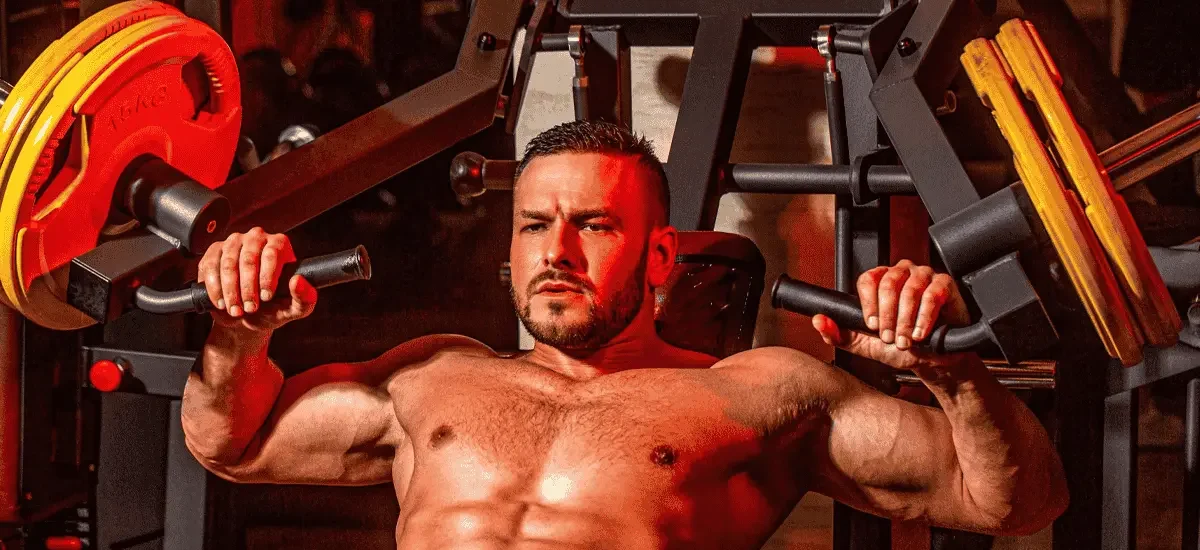
3. Chest Press Machine
Chest press machines are ideal for beginners and advanced lifters alike.
Advantages:
- Stable movement path
- Lower injury risk
- Perfect for controlled hypertrophy training
This is one of the safest chest exercises gym beginners can start with.
4. Cable Chest Fly
Cable flyes keep constant tension on the chest throughout the movement.
Key benefits:
- Excellent for muscle definition
- Improves mind-muscle connection
- Works well as a finishing exercise
Variation ideas:
- High-to-low fly (lower chest focus)
- Low-to-high fly (upper chest focus)
5. Pec Deck Fly
The pec deck is great for isolating the chest without involving too many supporting muscles.
Why include it:
- Easy to control
- Ideal for beginners
- Helps improve chest separation
Focus on slow, squeezing reps rather than heavy weight.
Sample Chest Workout Plan (Gym)
Here’s a simple yet effective chest workout you can follow:
Chest Day Routine:
- Barbell Bench Press – 4 sets × 6–8 reps
- Incline Dumbbell Press – 3 sets × 8–10 reps
- Chest Press Machine – 3 sets × 10–12 reps
- Cable Chest Fly – 3 sets × 12–15 reps
- Pec Deck Fly – 2 sets × 15 reps
Rest 60–90 seconds between sets for optimal muscle growth.
Common Mistakes to Avoid During Chest Exercises
Many people train chest regularly but still fail to see results due to poor technique.
Avoid these mistakes:
- Using too much weight with bad form
- Ignoring the upper chest
- Shortening the range of motion
- Training chest too frequently without recovery
Remember, muscle growth happens during recovery, not just workouts.
How Often Should You Train Chest?
For most people:
- 2 times per week is ideal
- Allow 48–72 hours of recovery
- Combine chest with triceps or shoulders for better split balance
Consistency matters more than intensity alone.
Nutrition Tips to Support Chest Muscle Growth
No chest workout is complete without proper nutrition.
Focus on:
- High-quality protein (eggs, chicken, paneer, whey)
- Complex carbs for workout energy
- Healthy fats for hormone support
- Adequate water intake
Without proper nutrition, even the best chest exercises gym routine will underperform.
Final Thoughts
Training your chest in the gym is one of the most effective ways to build upper-body strength, muscle size, and symmetry. By choosing the right exercises, maintaining proper form, and following a balanced routine, you can achieve visible and long-lasting results.
Stay consistent, train smart, and let your progress speak louder than the weights you lift.