

In today’s fast-paced world, flexibility and mobility are more important than ever. Whether you’re a gym enthusiast, athlete, office worker, or someone who simply wants to move better, understanding and improving your flexibility and mobility can significantly enhance your quality of life.
In this article, we will explore what flexibility and mobility are, their benefits, common causes of stiffness, and provide a detailed flexibility and mobility plan that you can start following today.
What Is Flexibility & Mobility?
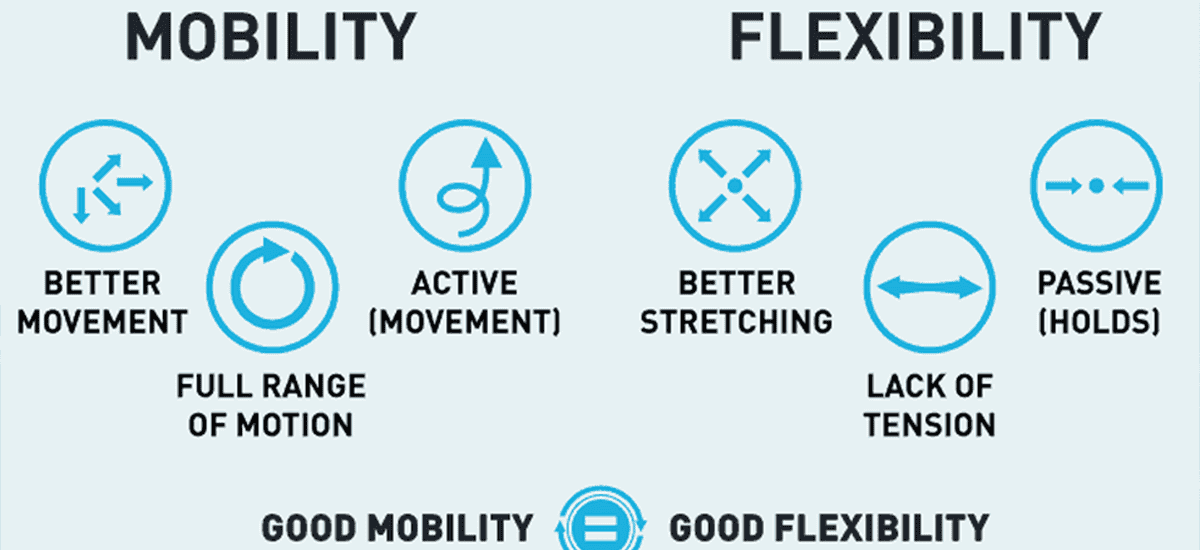
Flexibility refers to the ability of a muscle or group of muscles to lengthen passively through a range of motion. It’s about how far you can stretch a muscle without causing injury.
Mobility, on the other hand, refers to the ability of a joint to move actively through its full range of motion. Mobility involves strength, control, and stability—not just stretching.
👉 In simple words:
- Flexibility = How far you can stretch.
- Mobility = How well you can control movement through that range.
Why Flexibility & Mobility Matters
Here are some major benefits of improving your flexibility and mobility:
1. Reduces Risk of Injury
Better mobility means your joints can move smoothly, reducing stress on muscles, tendons, and ligaments.
2. Improves Posture
Tight muscles often lead to poor posture. Improving flexibility helps correct imbalances.
3. Enhances Athletic Performance
Better mobility improves movement patterns, strength output, and agility.
4. Reduces Pain
Mobility training can help reduce chronic pain, especially in the back, hips, and shoulders.
5. Improves Daily Movement
Simple tasks like bending, lifting, sitting, and walking become easier and pain-free.
Common Causes of Reduced Flexibility & Mobility
Understanding the root cause helps you fix the issue faster:
- Sitting for long hours
- Poor posture
- Lack of physical activity
- Muscle tightness due to training
- Stress and tension
- Injury or previous trauma
- Aging and loss of muscle elasticity
Flexibility vs Mobility: Why Both Are Important
Most people only focus on stretching and ignore mobility. But both are essential for optimal movement.
Flexibility Training
- Static stretching
- Improves muscle length
Mobility Training
- Joint rotations
- Dynamic movement patterns
- Improves joint control and strength
The best approach is to combine both for a balanced and injury-free body.
Flexibility & Mobility Plan (Beginner to Advanced)
Here is a detailed Flexibility & Mobility Plan that you can follow for 4 weeks. This plan is designed for beginners to advanced levels.
Week 1: Foundation Phase (Daily Routine)
Goal: Improve basic mobility and reduce stiffness.
Daily Routine (10–15 minutes)
1. Foam Rolling (2–3 minutes)
- Quads
- Hamstrings
- Glutes
- Calves
- Upper back
2. Dynamic Warm-up (5 minutes)
- Arm circles – 10 reps
- Hip circles – 10 reps
- Leg swings – 10 reps
- Ankle circles – 10 reps
3. Static Stretching (3–5 minutes)
- Hamstring stretch – 30 seconds
- Hip flexor stretch – 30 seconds
- Chest stretch – 30 seconds
- Shoulder stretch – 30 seconds
Week 2: Strength & Control Phase
Goal: Build joint stability and controlled mobility.
Routine (15–20 minutes)
1. Cat-Cow Stretch – 10 reps
Improves spinal mobility and reduces back stiffness.
2. Hip Flexor Stretch – 2 sets x 30 seconds
Helps with posture and lower back pain.
3. Scapular Wall Slides – 2 sets x 10 reps
Improves shoulder mobility and posture.
4. Deep Squat Hold – 2 sets x 20 seconds
Improves hip and ankle mobility.
5. T-Spine Rotations – 2 sets x 10 reps
Improves thoracic spine mobility and posture.
Week 3: Advanced Mobility Training
Goal: Improve range of motion and functional movement.
Routine (20–25 minutes)
1. Pigeon Pose – 2 sets x 30 seconds
Improves hip mobility and reduces lower back pain.
2. Cossack Squats – 2 sets x 8 reps
Enhances hip mobility and leg strength.
3. Overhead Squat – 2 sets x 8 reps
Improves shoulder, hip, and ankle mobility.
4. Wall Angels – 2 sets x 10 reps
Improves posture and shoulder mobility.
5. Thoracic Extensions – 2 sets x 10 reps
Enhances upper back mobility.
Week 4: Mobility & Flexibility Integration
Goal: Combine flexibility + mobility for maximum results.
Routine (25–30 minutes)
1. Dynamic Stretching (10 minutes)
- Walking lunges
- High knees
- Butt kicks
- Leg swings
2. Static Stretching (10 minutes)
- Hamstring stretch
- Hip flexor stretch
- Quad stretch
- Shoulder stretch
3. Mobility Drills (10 minutes)
- 90/90 hip switches
- Shoulder dislocates
- Deep squat hold
- Thoracic rotations
Flexibility & Mobility Tips for Faster Results
To get faster results, follow these important tips:
✅ Consistency is key
You must train at least 4–5 days a week.
✅ Warm up before stretching
Cold muscles can lead to injury.
✅ Breathe deeply during stretches
This improves relaxation and flexibility.
✅ Avoid bouncing
Bouncing can cause micro-tears and injury.
✅ Focus on full-body mobility
Don’t just stretch one muscle group.
Common Flexibility & Mobility Mistakes
Avoid these mistakes to prevent injury and get better results:
❌ Only stretching after workouts
Mobility should be trained separately too.
❌ Ignoring weak joints
Strength is essential for mobility.
❌ Not addressing posture
Poor posture limits mobility.
❌ Overstretching
This can lead to joint instability.
Conclusion
Flexibility & mobility are not just for athletes or fitness enthusiasts—they are essential for everyone. Improved mobility reduces pain, improves posture, enhances athletic performance, and makes daily activities easier.
By following this 4-week flexibility and mobility plan, you can achieve noticeable improvements in your movement, reduce stiffness, and build a stronger, more resilient body.
Start today, stay consistent, and watch your flexibility and mobility transform your life!